All Activity
- Past hour
-
Understanding 'Getenv Variable call denied'?
ScottMC replied to ScottMC's topic in AutoLISP, Visual LISP & DCL
Thanks PK for finding that. Something I've never found or got direct connection to error but now will have that as an understood rule. Will certainly look for that in my troubleshooting. -

How to copy an object to a specified distance
sinergy2020 replied to sinergy2020's topic in AutoCAD Beginners' Area
Not sure I totally understand this last .....is there a listing of osmodes somewhere? When I type osmode I get (by default) 549 ... what does it mean??? And, can I write lisp code in nanocad? -

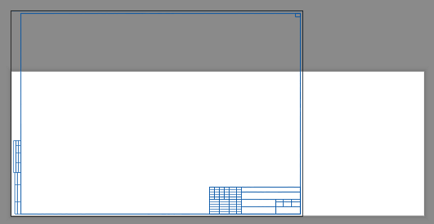
Add to the code the ability to create layouts for non-standard formats
Nikon replied to Nikon's topic in AutoLISP, Visual LISP & DCL
Non-standard formats are often required for drawings.
-

Add to the code the ability to create layouts for non-standard formats
BIGAL replied to Nikon's topic in AutoLISP, Visual LISP & DCL
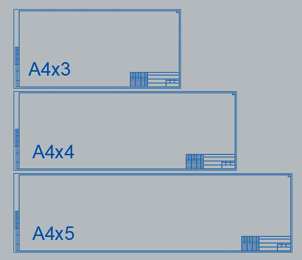
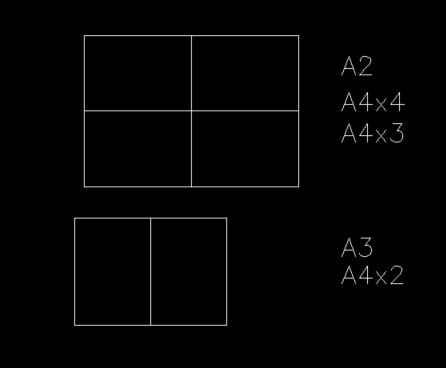
I don't understand why your using non standard size sheets ? A2 can be shown as 4 A4's same with 3 to be used but 4th blank. A A4x2 is a A3, the internal linework would be on a non plot layer. You could have 4 viewports shown.
- Today
-
How to copy an object to a specified distance
BIGAL replied to sinergy2020's topic in AutoCAD Beginners' Area
Like @CyberAngel if you set your osnap to what you want then type "Osmode" a number will appear that is current osnaps settings. Ok part two in say chx you can add this code. Note 1 is End. 0 is off. Normal drafting for me is 47. Try it (setvar 'osmode 47) then type osnap. For say a circle use 4. put at start (setq oldsnap (getvar 'osmode)) (setvar 'osmode 1) .... code put at end (setvar 'osmode oldsnap) -
Add to the code the ability to create layouts for non-standard formats
Nikon replied to Nikon's topic in AutoLISP, Visual LISP & DCL
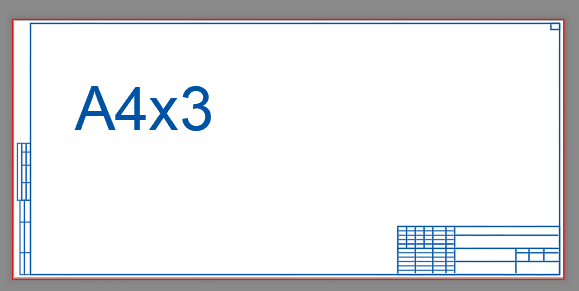
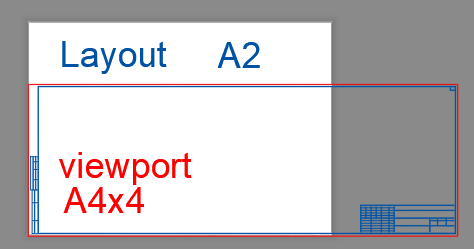
The layout is created correctly for this non-standard format. ((and (> Square 177755) (< Square 196466)) (vla-put-ConfigName Layout "DWG To PDF.pc3") (vla-put-CanonicalMediaName Layout "UserDefinedMetric (297.00 x 630.00мм)")) For this non-standard format (А4х4), the layout is set to A2_(594.00_x_420.00_MM), since the squares are the same (249480 и 249777), and therefore, the format that was previously written in the code is set. ((and (> Square 237006) (< Square 261954)) (vla-put-ConfigName Layout "DWG To PDF.pc3") (vla-put-CanonicalMediaName Layout "ISO_full_bleed_A2_(594.00_x_420.00_MM)")) ; А2 594.00x420.00=249480 ((and (> Square 237288) (< Square 262266)) (vla-put-ConfigName Layout "DWG To PDF.pc3") (vla-put-CanonicalMediaName Layout "UserDefinedMetric (297.00 x 841.00мм)")) ; А4х4 297.00x841.00=249777 How can this be fixed? If the lines in are arranged like this ((and (> Square 237006) (< Square 261954)) (vla-put-ConfigName Layout "DWG To PDF.pc3") (vla-put-CanonicalMediaName Layout "ISO_full_bleed_A2_(594.00_x_420.00_MM)")) ; А2 594.00x420.00=249480 ((and (> Square 237288) (< Square 262266)) (vla-put-ConfigName Layout "DWG To PDF.pc3") (vla-put-CanonicalMediaName Layout "UserDefinedMetric (297.00 x 841.00мм)")) ; А4х4 297.00x841.00=249777 If the lines in are arranged like this ((and (> Square 237288) (< Square 262266)) (vla-put-ConfigName Layout "DWG To PDF.pc3") (vla-put-CanonicalMediaName Layout "UserDefinedMetric (297.00 x 841.00мм)")) ; А4х4 297.00x841.00=249777 ((and (> Square 237006) (< Square 261954)) (vla-put-ConfigName Layout "DWG To PDF.pc3") (vla-put-CanonicalMediaName Layout "ISO_full_bleed_A2_(594.00_x_420.00_MM)")) ; А2 594.00x420.00=249480
-
Add to the code the ability to create layouts for non-standard formats
BIGAL replied to Nikon's topic in AutoLISP, Visual LISP & DCL
If you look at this snippet of code it is all the values required, insert correct title block and make a viewport. This is for one viewport, multiple title blocks. (cond ((= ntitle "A0_Landscape") (setq ht 780.0 wid 1160.0 xpt 878.0 xwid 62.0 yht 32.0)) ((= ntitle "A1_Landscape") (setq Ht 541.0 wid 831.0 xpt 542.0 xwid 62.0 yht 32.0)) ((= ntitle "A1_Portrait") (setq Ht 774.0 wid 571.0 xpt 229.0 xwid 62.0 yht 32.0)) ((= ntitle "A2_Landscape") (setq ht 367.0 wid 584.0 xpt 295.5 xwid 62.0 yht 32.0)) ((= ntitle "A2_Portrait") (setq ht 554.0 wid 410.0 xpt 209.5 xwid 41.0 yht 23.0)) ((= ntitle "A3_Landscape") (setq ht 247.0 wid 400.0 xpt 200.0 xwid 41.0 yht 23.0)) ) So for multiple viewport the cond would use a "list" of values, title block then the viewport say lower left X,Y then upper right X,Y, repeat for how many viewports required. You could pick correct title block from a dcl radio button you can have around 20 in vertical dcl. If I am understanding correct post a true title block with say 3 viewports and will post some sample code, -
How to copy an object to a specified distance
sinergy2020 replied to sinergy2020's topic in AutoCAD Beginners' Area
Thanks again @CyberAngel I just realized that I didn't check the boxes of the different snap settings -

Understanding 'Getenv Variable call denied'?
pkenewell replied to ScottMC's topic in AutoLISP, Visual LISP & DCL
@ScottMC I don't recommend you put the OSMODE change in the CMDACTIVE loop. Here is how I would do it; tested this and it works perfectly. (defun c:C2 (/ cr el *error* fp oe os p p2) (defun *error* (msg) (if oe (setvar "cmdecho" oe)) (if os (setvar "osmode" os)) (vla-endundomark (vla-get-activedocument (vlax-get-acad-object))) (princ (strcat "\n" msg)) ) (vla-startundomark (vla-get-activedocument (vlax-get-acad-object))) (setq oe (getvar "cmdecho") os (getvar "osmode") ) (setvar "cmdecho" 0) (while (and (setvar 'osmode (boole 7 os 512)) (setq fp (getpoint "\nSpecify 1st Point of 2P.Circle: ")) ) (command "._Circle" "_2P" "_non" fp "_per");; Add "PER" to overide OSNAP here. (princ "\nSecond Point: ") (while (= (logand (getvar "cmdactive") 1) 1) (command pause) ) (setvar "osmode" os) (setq el (entget (entlast)) p (trans (cdr (assoc 10 el)) (cdr (assoc 210 el)) 1) p2 (getvar "lastpoint") cr (getvar "circlerad") ) (entdel (entlast)); Delete the Circle (princ (strcat "\n Coordinates: " (setq C2:pp ;; Global Variable "C2:pp" (strcat (rtos (car p) 2 4) "," (rtos (cadr p) 2 4) "," (rtos (caddr p) 2 4) ) ) "\n Diameter: " (rtos (* cr 2) 2 4) " | Radius: " (rtos cr 2 4) "\n" ) ) (entmakex (list (cons 0 "POINT") (cons 10 p))) (entmakex (list (cons 0 "POINT") (cons 10 p2))) (entmakex (list (cons 0 "CIRCLE") (assoc 10 el) (assoc 8 el) (assoc 40 el))) ; Recreate the Circle ) (setvar "cmdecho" oe) (vla-endundomark (vla-get-activedocument (vlax-get-acad-object))) (princ) ) If you don't want PERP to be the only snap available, then try your method, but before the CMDACTIVE loop: (command ".circle" "2p" 1st) (setvar 'cmdecho 1) (setvar 'osmode (boole 7 (getvar 'osmode) 128)) ;; added 'perp (while (= 1 (logand 1 (getvar 'cmdactive))) (command "\\") ) -
 mitiamak joined the community
 -

How to copy an object to a specified distance
CyberAngel replied to sinergy2020's topic in AutoCAD Beginners' Area
According to the NanoCAD web site, there is a snap option (OSNAP) that works like AutoCAD's. The endpoint snap ought to pick up the corners of a rectangle, unless there's something weird about NanoCAD's rectangle. Assuming you can snap onto the bottom right corner of the existing rectangle, you should be able to give a displacement from there to the bottom left corner of the new rectangle. That seems to be what you want. The whole point of snap mode is to give you an exact location based on an object, not on your closest pick point. Is it possible that you have a grid option enabled at the same time? That would explain why you can't always snap to an object, if there are grid intersections all around it. According to NanoCAD again, there is a "Snap and Grid" tab in the Drafting Settings dialog. Disable the grid snap and see what happens. -
 norad joined the community
 -
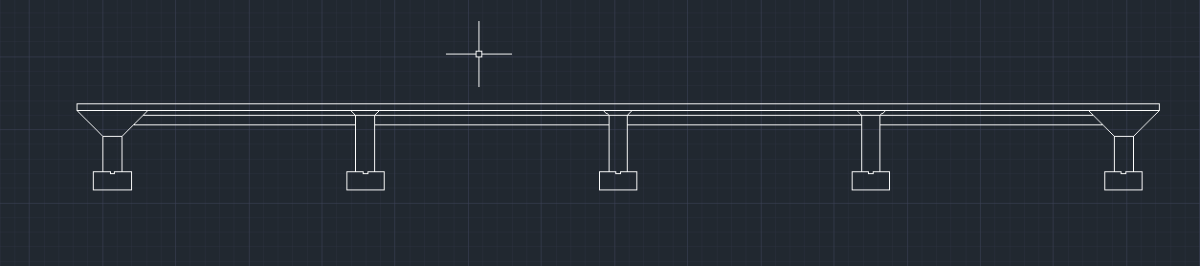
I'm assuming you created what is shown in the image above. You need to show the drain above the footing, the steel reinforcing rods, or rebar, as they are referred to in the concrete footings and columns, the baseplate at the foot of the columns, the columns themselves, etc., etc., etc. There are other threads about this project, in this forum, that contain word descriptions along with images that should prove useful to you. I suggest you research them as duplicating all that information here would be counterproductive.
-
 aniruddharaste changed their profile photo
 -
Add to the code the ability to create layouts for non-standard formats
Nikon replied to Nikon's topic in AutoLISP, Visual LISP & DCL
Thank you, is it possible to write this in the code so that the layout parameters are obtained automatically. I didn't understand this line: ("A3" "0,20" "140,190" "140,20" ""280,190" -
aniruddharaste joined the community
-
 cccc joined the community
 -

Hello everyone! Please take a look at this.
yangguoshe replied to sd2006's topic in AutoLISP, Visual LISP & DCL
(defun rh:dxf (code lst) (cdr (assoc code lst))) (defun c:aa ( / cmde ent e_typ e_lst area vtx x_lst y_lst z_lst x_pt y_pt z_pt c_lst v_lst ss sum sz) (cond ( (/= 0 (getvar 'cmdecho)) (setq cmde (getvar 'cmdecho)) (setvar 'cmdecho 0) ) ) (while (setq ss (ssget "_+.:E:S" '((0 . "POLYLINE,LWPOLYLINE") (-4 . "<OR") (70 . 1) (70 . 3) (70 . 5) (-4 . "OR>") ) )) (setq ent (ssname ss 0) e_typ (rh:dxf 0 (setq e_lst (entget ent))) area (getpropertyvalue ent "area") v_lst nil ) (cond ( (= e_typ "POLYLINE") (setq ent (entnext ent) vtx (rh:dxf 10 (entget ent)) ) (if (< (length vtx) 3) (setq vtx (reverse (cons 0.0 (reverse vtx))))) (while (/= "SEQEND" (cdr (assoc 0 (entget ent)))) (setq v_lst (cons vtx v_lst) ent (entnext ent) vtx (rh:dxf 10 (entget ent)) ) (if (< (length vtx) 3) (setq vtx (reverse (cons 0.0 (reverse vtx))))) ) (setq x_pt (/ (apply '+ (mapcar '(lambda (x) (car x)) v_lst)) (length v_lst)) y_pt (/ (apply '+ (mapcar '(lambda (x) (cadr x)) v_lst)) (length v_lst)) ) (if (= (setq sum (apply '+ (mapcar '(lambda (x) (caddr x)) v_lst))) 0.0) (setq z_pt 0.0) (setq z_pt (/ sum (length v_lst))) ) ) ( (= e_typ "LWPOLYLINE") (setq z_pt (rh:dxf 38 e_lst)) (foreach pr e_lst (if (= (car pr) 10) (setq v_lst (cons (cdr pr) v_lst))) ) (setq x_pt (/ (apply '+ (mapcar '(lambda (x) (car x)) v_lst)) (length v_lst)) y_pt (/ (apply '+ (mapcar '(lambda (x) (cadr x)) v_lst)) (length v_lst)) ) ) ) (setq c_lst (list x_pt y_pt z_pt)) (if(not sz) (progn (vla-getboundingbox (vlax-ename->vla-object ent) 'MinPT 'MaxPT) (setq p1 (vlax-safearray->list MinPT) p2 (vlax-safearray->list MaxPT)) (setvar 'textsize (* 0.05 (distance p1 p2))) (setq sz t) ) ) (entmakex (list (cons 0 "MTEXT") (cons 100 "AcDbEntity") (cons 100 "AcDbMText") (cons 10 c_lst) (cons 40 (getvar 'textsize) ) (cons 71 5) (cons 72 5) (cons 1 (strcat (rtos (/ area 1000000.0) 2 2) "m\U+00B2")) ) ) ) (if cmde (setvar 'cmdecho cmde)) ) -
Hello everyone! Please take a look at this.
yangguoshe replied to sd2006's topic in AutoLISP, Visual LISP & DCL
(defun rh:dxf (code lst) (cdr (assoc code lst))) (defun c:aa ( / cmde ent e_typ e_lst area vtx x_lst y_lst z_lst x_pt y_pt z_pt c_lst v_lst ss sum) (cond ( (/= 0 (getvar 'cmdecho)) (setq cmde (getvar 'cmdecho)) (setvar 'cmdecho 0) ) ) (while (setq ss (ssget "_+.:E:S" '((0 . "POLYLINE,LWPOLYLINE") (-4 . "<OR") (70 . 1) (70 . 3) (70 . 5) (-4 . "OR>") ) )) (setq ent (ssname ss 0) e_typ (rh:dxf 0 (setq e_lst (entget ent))) area (getpropertyvalue ent "area") v_lst nil ) (cond ( (= e_typ "POLYLINE") (setq ent (entnext ent) vtx (rh:dxf 10 (entget ent)) ) (if (< (length vtx) 3) (setq vtx (reverse (cons 0.0 (reverse vtx))))) (while (/= "SEQEND" (cdr (assoc 0 (entget ent)))) (setq v_lst (cons vtx v_lst) ent (entnext ent) vtx (rh:dxf 10 (entget ent)) ) (if (< (length vtx) 3) (setq vtx (reverse (cons 0.0 (reverse vtx))))) ) (setq x_pt (/ (apply '+ (mapcar '(lambda (x) (car x)) v_lst)) (length v_lst)) y_pt (/ (apply '+ (mapcar '(lambda (x) (cadr x)) v_lst)) (length v_lst)) ) (if (= (setq sum (apply '+ (mapcar '(lambda (x) (caddr x)) v_lst))) 0.0) (setq z_pt 0.0) (setq z_pt (/ sum (length v_lst))) ) ) ( (= e_typ "LWPOLYLINE") (setq z_pt (rh:dxf 38 e_lst)) (foreach pr e_lst (if (= (car pr) 10) (setq v_lst (cons (cdr pr) v_lst))) ) (setq x_pt (/ (apply '+ (mapcar '(lambda (x) (car x)) v_lst)) (length v_lst)) y_pt (/ (apply '+ (mapcar '(lambda (x) (cadr x)) v_lst)) (length v_lst)) ) ) ) (setq c_lst (list x_pt y_pt z_pt)) (vla-getboundingbox (vlax-ename->vla-object ent) 'MinPT 'MaxPT) (setq p1 (vlax-safearray->list MinPT) p2 (vlax-safearray->list MaxPT)) (entmakex (list (cons 0 "MTEXT") (cons 100 "AcDbEntity") (cons 100 "AcDbMText") (cons 10 c_lst) (cons 40 (* 0.02 (distance p1 p2)) );(getvar 'textsize)) (cons 71 5) (cons 72 5) (cons 1 (strcat (rtos (/ area 1000000.0) 2 2) "m\U+00B2")) ) ) ) (if cmde (setvar 'cmdecho cmde)) ) -
Understanding 'Getenv Variable call denied'?
ScottMC replied to ScottMC's topic in AutoLISP, Visual LISP & DCL
totally guessing but seems to crash on multi seq. here's the mods u suggested added. Guessing the: (while (= (logand (getvar "cmdactive") 1) 1) ;; <--- might be crash source didn't do a vlide source method yet. So many of my copy/erase/paste to be replaced! Thanks PK. (defun c:c2 ( / *error* el p oldsnap 1st) ;just 2 point.. //wasCIRCLE TANGENT RE: 19SEPT17 (princ "\n 2.Point Circle (M) <'CT for.tan !pp> ") (setq oldsnap (getvar 'osmode)) (setvar 'osmode (boole 7 (getvar 'osmode) 512)) ;; added 'nea for 1st point (defun *error* ( msg ) (setvar 'cmdecho 0) ;; 5.28.24 (vla-endundomark (vla-get-activedocument (vlax-get-acad-object))) (setvar 'osmode oldsnap) (if msg (prompt (strcat "\n" msg))) (setvar 'cmdecho 1) (princ) ) (initget 103) (setvar 'cmdecho 0) (while T ;; 'M' loop.. (setq 1st (getpoint "\n Specify 1st Point of 2P.Circle: ")) ;; get 1st edge of '2p.cir (command ".circle" "2p" 1st) (setvar 'cmdecho 1) (while (= 1 (logand 1 (getvar 'cmdactive))) (setvar 'osmode (boole 7 (getvar 'osmode) 128)) ;; added 'perp (command "\\") ) (setq p2 (getvar 'lastpoint)) ;; posted \/ y,n? (setq el (entget (entlast))) ;; <-- removed replaced copy/erase (setq p (trans (cdr (assoc 10 el)) (cdr (assoc 210 el)) 1)) ;; 210 for 'z' direction (entdel (entlast)); Delete the Circle for last ent selection.. (setvar 'osmode oldsnap) (setvar 'cmdecho 0) (princ "\n") (princ (setq pp ;; make/prints coords & paste usable (strcat (rtos (car p) 2 4) "," ;; 'p' -- vertex from pgm /\ getpoint,... (rtos (cadr p) 2 4) "," (rtos (caddr p) 2 4) ) ) ) (princ (strcat " | Ø: " (rtos (* (getvar 'circlerad) 2) 2 4)" | R: " (rtos (getvar 'circlerad) 2 4))) (entmakex (list (cons 0 "POINT") (cons 10 p))) ;; clean point (entmakex (list (cons 0 "POINT") (cons 10 p2))) ;; clean point (entmakex (list (cons 0 "CIRCLE") (assoc 10 el) (assoc 8 el) (assoc 40 el))) ; Recreate the Circle (setenv "pp" pp) ;; sys saved, restored at restart ) ;; end of while (setvar 'cmdecho 1) (*error* nil) ;; restore saved vars (princ) ) - Yesterday
-
 Marcelo Oliveica joined the community
 -
Add to the code the ability to create layouts for non-standard formats
BIGAL replied to Nikon's topic in AutoLISP, Visual LISP & DCL
Are you saying you want say a A3 sheet 420x297 but with 3 viewports, that can be done. To have a oversize sheet does not make sense to me. You just set up the sheet details and the location of each viewport, not hard to do. ("A3" "0,20" "140,190" "140,20" ""280,190" and so on) -

[Free LISP] Auto-mark revision clouds for design changes — compare two regions in same DWG
Beastt1992 replied to Beastt1992's topic in AutoLISP, Visual LISP & DCL
Hi Steven, spot on! The LISP definitely flags raw geometry changes, not design intent. I actually use it as a "first pass" safety net. It's much faster to let the script cloud everything that moved and simply delete the few "false positives" (like lines stretched for spacing) than to manually hunt for actual design changes. For the overlapping issue: the clouds are standard polylines on a dedicated layer. You can easily grip-stretch them out of the way, or use DFCT beforehand to increase the padding so they draw looser. It doesn't replace a drafter's eye, but it definitely handles the heavy lifting of finding the changes first! Thanks for checking it out. -

[Free LISP] Auto-mark revision clouds for design changes — compare two regions in same DWG
Steven P replied to Beastt1992's topic in AutoLISP, Visual LISP & DCL
I tend to do this manually - often stretching lines one way or another to make way for other details, but these are not changes that need to be recorded - your LISP would record that though? Adding a cloud myself allows me to position it so that it is not on top of other entities. -
I was told making multiple layouts for the seven sheets is acceptable So i manage to create the title block and did the sheet one. I'm now at Sheet/Plate 2 and i'm stuck. {"A 4″ drain is set around the outside of the building, with 3″ clear above the footings to the drain and 3″ clear from the piers to the drain. The rebar in the bottom and along the sides of the footings is #4 rebar (1⁄2″ diameter) at 8″ OC both ways. The rebar is located 3.5″ from the face of the footing on each edge. The rebar near the bottom of the footing extends up the sides of the footing by 6″. The callout for the rebar is #4 ∅ @ 8″ O.C. BOTH WAYS. Vertical and horizontal rebar is placed in the pier. Notice how the rebar from the pier extends down into the footing—use the same detail here but space the horizontal rebar at 8″ centers. The overlap detail at the bottom of the rebar is 2″ long. This rebar is #6 rebar (3⁄4″ diameter) at 8″ OC. Add a callout for this rebar. A steel sheet is centered over each footing at the top of the first-floor concrete slab. The sheet is 14 × 14 × 1⁄2. The W12 × 152 steel column is welded to the sheet. The weld is a 1⁄2″ fillet weld. The weld symbol—as it should also appear in a detail of the joint on your drawing—consists of an arrow, two triangular “fillets,” and the size designation. Note that the triangular shape appears on both sides of the horizontal line. The use of two triangles on the symbol indicates that the weld is made on the arrow side of the joint as well as on the opposite side. If the required weld were only on the arrow side of the joint, the triangle would appear on only the bottom part of the horizontal line."}
-
Add to the code the ability to create layouts for non-standard formats
pkenewell replied to Nikon's topic in AutoLISP, Visual LISP & DCL
NOTE: If your viewport frames do not match the paper size (for example: you put your borders in Paperspace and you only use the area internal to the border), Then use the area of the viewport frame to determine the size range, not the paper size. -
Add to the code the ability to create layouts for non-standard formats
Nikon replied to Nikon's topic in AutoLISP, Visual LISP & DCL
It is enough that the frames are just on one layer. I will try to add squares and formats to the code, but it seems to me that a different approach is needed for non-standard formats. -
Add to the code the ability to create layouts for non-standard formats
pkenewell replied to Nikon's topic in AutoLISP, Visual LISP & DCL
Are these the actual names of the Paper sizes in the pc3 file? The squares in your example file are just the paper sizes. You need to know the Frame layer, and the size range of the Frames that create your viewports. In any case - you should have all the information you need to do it yourself. as I said in the above to lay it out more clearly: 1) You need a range of AREA to be within on the frames. For example, on your "A4x3", (297 x 630) = 187110. Your range for the "square" variable should be a min and max with this value in the middle, such as 187110 - 10000 = 177110 "(> Square 177110)" and 187110 + 10000 = 197110 "(< Square 197110)" 2) each added condition should have the exact name of the Custom paper size: ((and (> Square 177110) (< Square 197110))(vla-put-ConfigName Layout "DWG To PDF.pc3")(vla-put-CanonicalMediaName Layout "_A4x3_(297.00_x_630.00_MM)")) ALSO: 3) You must have a unique Layer for the Frame polylines or blocks, something like "MyPaperSizeFrameLayer", or anything, as long as it is unique to the frames. -
 h.elbattani joined the community
 -
Add to the code the ability to create layouts for non-standard formats
Nikon replied to Nikon's topic in AutoLISP, Visual LISP & DCL
I have attached a dwg example. -
Add to the code the ability to create layouts for non-standard formats
pkenewell replied to Nikon's topic in AutoLISP, Visual LISP & DCL
The condition lines I added were just examples of how to add more sizes. As long as you know the areas and the name of the paper size, you should be able to add them. The "Square" variable as i understand it, is the min and max AREA of the frame you select (Length x Width), for the condition to select the paper size. This depends on what you are selecting for the frame to define the paper size. How would I know, if I don't have an example of what you are selecting? -
Add to the code the ability to create layouts for non-standard formats
Nikon replied to Nikon's topic in AutoLISP, Visual LISP & DCL
I don't use such formats: "ISO_full_bleed_2A0_(1189.00_x_1682.00_MM)" "ISO_full_bleed_4A0_(1682.00_x_2378.00_MM)" The sizes of the formats are listed in the list "List of non-standard formats". I don't understand how to get these numbers: (> Square 59251) (< Square 65488) (> Square 118503) (< Square 130977) and how will they help you create a non-standard layout?