All Activity
- Past hour
-

Using Arraypath function via scripting, duplicating lines are created in opposite direction of curve path
SLW210 replied to harshil's topic in AutoCAD LT
I can move the geometry a good bit away and it works fine. The original LISP works, the exact location seems an issue and something is messing up the direction. Are there other examples of where it fails? I added prompts for Layer, Path and number. AUTOHPA_SLW.lsp -
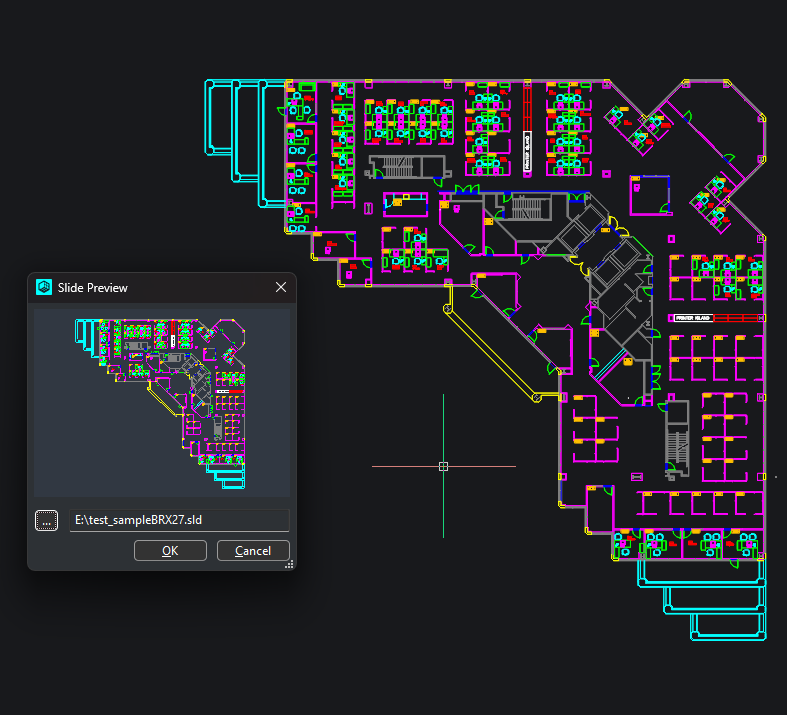
Python Slide(.SLD) to wxImage In the next release (3.1.16), I added a function, image: wx.Image = Gs.Core.slideToWxImage(test_slide_path, width, height, [R, G, B]) for people that are used to using slides in their dialogs.

- Today
-
STEP vs SAT: Which one preserves editable 3D geometry more reliably?
SLW210 replied to indiancad's topic in AutoCAD 3D Modelling & Rendering
I do not recall having many issues with any of them. AutoCAD cannot export directly to STEP, only Mechanical (which is a FREE toolset though). Normally I determine the type by what is needed by the program that needs it, if any will work normally ACIS (.sat) would be preferred and if the program can I just keep it as a .dwg. For 3d Printing I use .stl and ultimately .3mf. If unknown what the end use will be, STEP is usually the best bet. -
.thumb.jpg.615654602253be56b2fbd5d064834780.jpg)
STEP vs SAT: Which one preserves editable 3D geometry more reliably?
indiancad posted a topic in AutoCAD 3D Modelling & Rendering
When transferring a mechanical model between CAD applications, choosing an exchange format can affect more than just how the model looks. Face boundaries, analytic surfaces, and solid recognition can influence how easily the imported part can be modified. A model may import successfully but still require extra work before features can be edited or downstream operations can be performed reliably. I’m interested in practical experience rather than just format specifications. When exchanging 3D solids between different CAD systems, have you found STEP or SAT more reliable for preserving usable geometry? Does your choice change depending on the type of model? -
Just hold on model area and move up .then it will automatically got set.
-
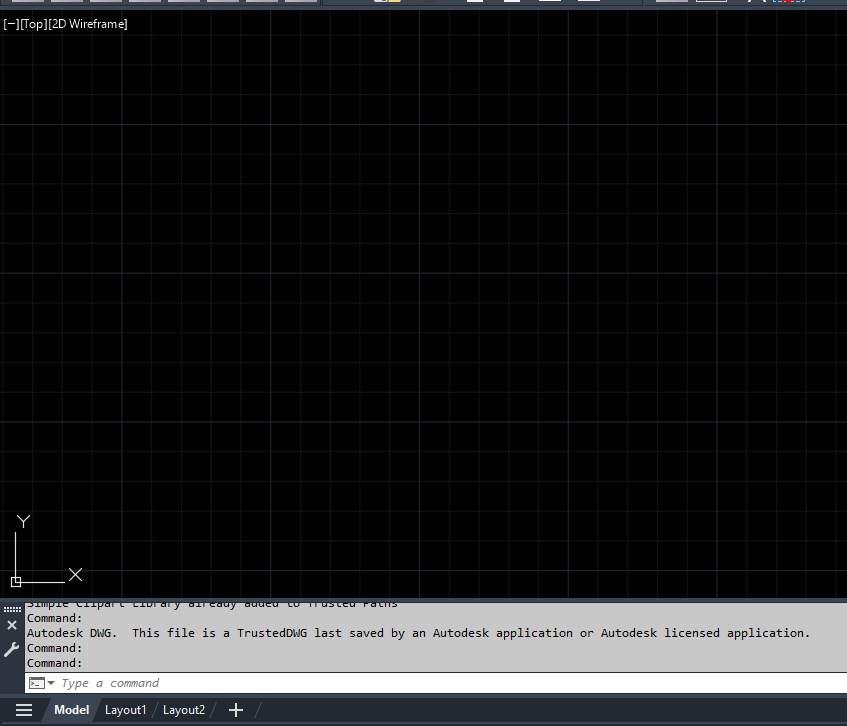
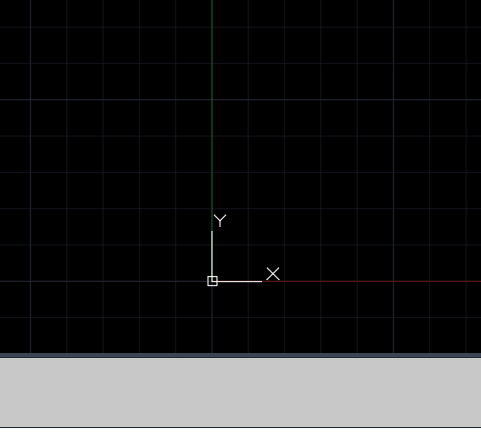
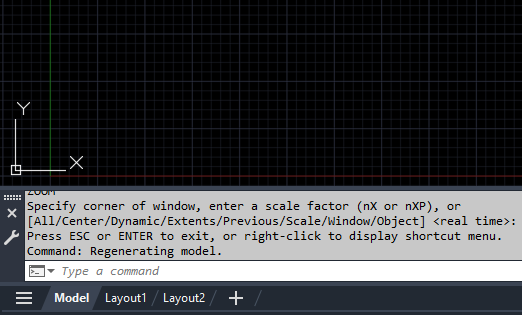
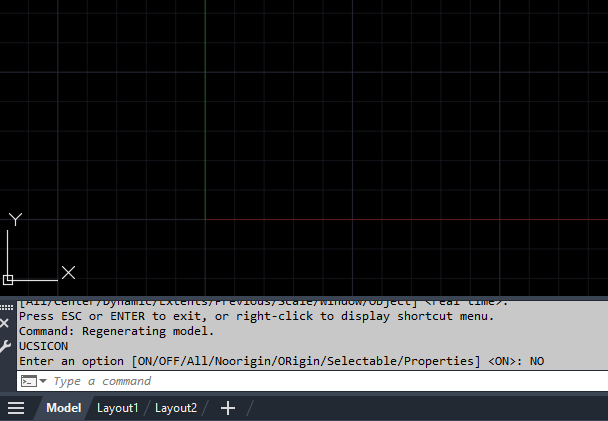
@LIU When I first open your dwt template dwg this is how it looks like with the UCSICON on the lower left corner but no red or green lines shown: Then I scroll the mouse to zoom outward then eventually the red & green lines show up with the UCSICON now positioned at the location where they cross: But once I use the scroll mouse to zoom in again to the point where the green and red lines are close to the lower left hand corner of the drawing window, the UCSICON is displayed no longer at the location where the two lines cross over: This is normal display behavior because AutoCAD is trying to display the UCSICON at the origin where X (red line) and Y (green line) crosses = 0,0. If you don't want to see the UCSICON constantly moving then enter the following at the command prompt: UCSICON NoOrigin Now when you zoom in and out, the UCSICON is no longer constantly moving to try and position itself at the corner of the green & red lines. But instead the UCSICON is now always positioned in the lower left corner of the drawing area: Hope this answers your question.
-
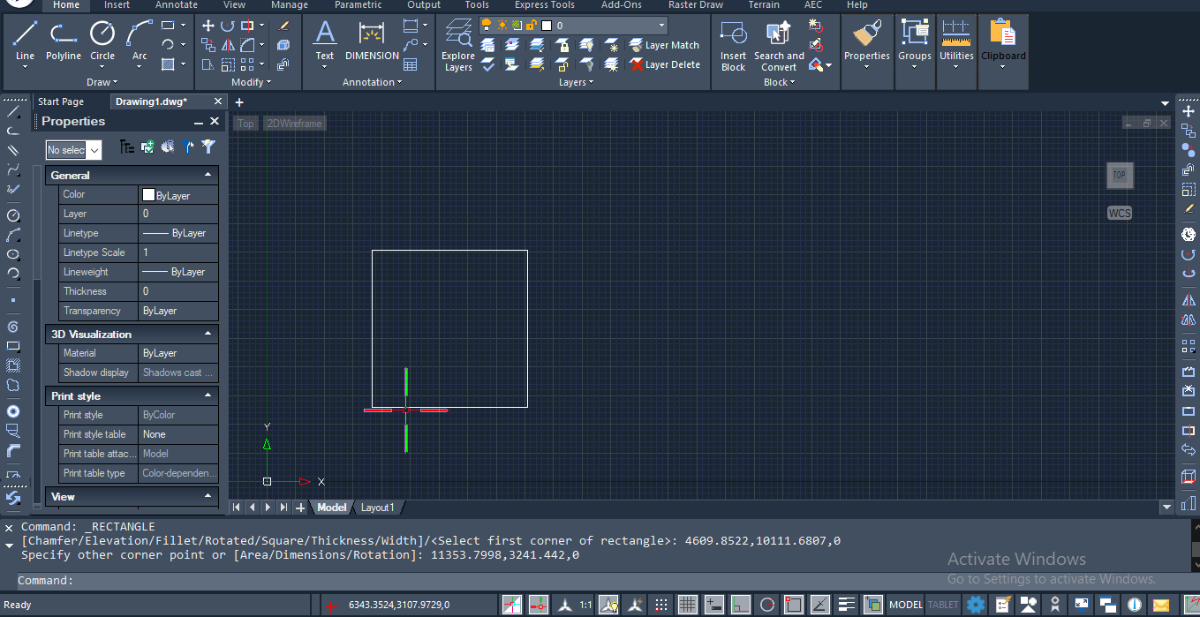
sorry, i had a problem with autocad, this is the drawing file , open the drawing and roll wheel to yourself. what is problem with red and green lines parallel to x-axis and y-axis My-Architectural-Templyte-1.dwt
-
 Muralidharan joined the community
 -

Beyond APPLOAD: A local script manager for those of us with too many LISPs
VicoWang replied to VicoWang's topic in AutoLISP, Visual LISP & DCL
@aridzv Thank you for the correction. This post indeed mainly discusses the management of individual users, and it was off-topic. The previous discussion was mainly about answering your question about why it developed into the cloud. At the level of individual user management, VedaCAD's Base mode (100% local, not actively connected to the internet) has a similar approach to your solution: In the Base mode, the same file migration is required to transfer to a new machine using VC. You just need to export the configuration file from the old computer's VC, copy the plugin folder (for example, the folder on the old computer is: E:/CADTools/), and then import the configuration file on the new computer, and copy the CADTools/ folder to the same location on the new computer (E:/CADTools/), and the migration is complete. (The exported configuration file is a small database, mainly mapping relationships and custom configurations, not specific plugin files) If it is the FREE tier, you can even use the self-use bundle method to achieve the ability to restore and synchronize the entire configuration with one click, Results like the PRO level (the VC system has opened up configuration cloud synchronization capabilities specifically for the PRO level, truly realizing the ability to sync the entire working environment configuration with one click) Most importantly, the VedaCAD client is just a VLX plugin, and it does not modify any registry, ignores any supported path issues, and achieves capabilities similar to your existing solution, such as on-demand loading. - Yesterday
-

Beyond APPLOAD: A local script manager for those of us with too many LISPs
aridzv replied to VicoWang's topic in AutoLISP, Visual LISP & DCL
@VicoWang Hi. 1. the first post of this thread talked about controling the lisps and varaibles of a single user and that was my main focus. 2. in your comment above, section 1 (and @Paul Li also refered to it in this thread) you talk about development environment and app deployment, and that is a different topic. I'm a single user, so I can't talk that much about working in a big firm\company, and how big organizations should deal with the issues you raised. -
Beyond APPLOAD: A local script manager for those of us with too many LISPs
VicoWang replied to VicoWang's topic in AutoLISP, Visual LISP & DCL
@aridzv You have developed a plugin and distributed it to 1000 users. When you need to update this plugin, or you want to know exactly how many devices have genuinely downloaded your plugin. When you change devices (I know your method, but VedaCAD's method is to log in to VC, click sync, and the deployment of all configurations including custom shortcut keys is completed). You manage the computers of 100+ employees in the entire company (offices may be in different cities or even different countries), providing employee A with (construction group plugins and standard sets), and employee B with (structural group plugins and standard sets). When you formulate, manage, and update the drafting standards of subcontractors, and even need to retrieve the specific drafting standards version of a project from 3 years ago. When your OneDrive or shared drive is locked offline due to errors, such as network fluctuations, or when you need to work outside the office. It's just that your own usage scenario is sufficient without the need for the cloud. The real logic of VedaCAD is a local sandbox managed by the cloud: it has 99.99% of the availability of the cloud, as well as the I/O execution speed of local files. -
 BredlyGreen357 joined the community
 -
Xref hatches plot solid black and fonts change on my machine only
SLW210 replied to xurshid_viewport's topic in AutoCAD Beginners' Area
Maybe try XREFOVERRIDE and VISRETAIN. How does it look in the plot preview? How does it look when plotted to paper? You might go through THIS. -
Why can a 3D model fail during STL export even when it looks correct?
indiancad posted a topic in AutoCAD 3D Modelling & Rendering
A 3D model can look perfectly fine on screen, but problems may appear when exporting it for 3D printing. Open edges, overlapping faces, internal geometry, or non-manifold areas can make a mesh difficult for the next application to process. The tricky part is that these issues are not always obvious from the model's appearance. When this happens, I would rather identify the underlying geometry problem than keep repeating the export. What checks do you perform before exporting a 3D model to STL? Do you validate the solid in CAD first, or use a separate mesh-repair tool? -
Is the LIST command enough to troubleshoot CAD geometry?
indiancad replied to indiancad's topic in AutoCAD Drawing Management & Output
Thanks for mentioning DUMPIT.lsp! I haven’t explored that approach much. Getting more detailed entity information through Visual LISP sounds useful, especially when troubleshooting or checking results from custom routines. -
Is the LIST command enough to troubleshoot CAD geometry?
indiancad replied to indiancad's topic in AutoCAD Drawing Management & Output
Your point about checking the command history first makes sense, especially when an operation fails. I also like the idea of using LIST to copy and verify entity data when working with LISP. It seems the best tool really depends on what you're trying to diagnose. -
 Dennis Corrêa joined the community
 -
Hi, I saw your post about the custom Civil 3D .NET SubAssembly and the integrated plugin, and I'd like to help. I'm Dennis Correa, founder of Viarion Technology, a company that builds software for engineering. I've also worked as a road designer for 12 years at an engineering firm, using Civil 3D on DNIT/DER infrastructure projects, and I develop in C# on the Civil 3D .NET API. Our product, VIARION Plugins, is a single Civil 3D bundle with 25 commands (ribbon, WPF UI, Excel output), built for Civil 3D 2026 (.NET 8) and 2027 (.NET 10). It is currently being hardened for commercial release. Examples of what it does: - Earthworks service notes exported to XLSX, with automatic point-code detection - Alignment and profile tables in the DNIT standard - Alignment audit against IPR-706, with an audit report - Section hatch analysis with a delivery spreadsheet - Mass balance panel (Bruckner diagram) I also built Reurb-3D, a Civil 3D plugin using Solid3d/boolean operations and IFC export, feeding an InfraWorks-to-web visualization pipeline, delivered to a client with a user manual. Because I work with corridors and assemblies every day, I can make the SubAssembly behave correctly in real projects (varying widths, superelevation, targets), not just compile. I also already package Civil 3D plugins as ApplicationPlugins bundles for both 2026 and 2027, with a hash-verified installer, so the delivery side is covered. What you described, as I understand it: - A custom .NET SubAssembly similar in behavior to LaneInsideSuperLayerVaryingWidth_V2 (NTCLSoft) - A plugin integrated into Civil 3D with a native ribbon and palette - Delivery of source code, the .dll and the .pkt, since you plan to offer it to your own clients How I would work: 1. Milestone 1: SubAssembly with parameters, targets and behavior spec agreed with you, tested in a sample corridor 2. Milestone 2: Plugin UI (ribbon + palette), commands and settings 3. Milestone 3: Packaging (.dll, .pkt, bundle), documentation and full source code handover I can propose a fixed price per milestone once I confirm a few points: - Which Civil 3D versions you need to support (and .NET 8 vs .NET Framework) - Whether the behavior must match the NTCLSoft subassembly exactly or just be functionally similar - Any licensing or protection you want on the plugin My code is in private repositories since these are commercial products, but I can send screenshots or a short screen recording of the plugins in Civil 3D, and a small code sample under NDA if you need it. If the project is still open, I'm available to start [date]. Happy to do a short call to align on scope. Best regards, Dennis Corrêa Viarion Technology Ltda | dennis.correa@viarion.com.br
-

Xref hatches plot solid black and fonts change on my machine only
xurshid_viewport posted a topic in AutoCAD Beginners' Area
Hello all. I draw small residential projects in LT 2022 at a two-person bureau, and I keep running into the same thing with xrefs. The architect I work with sends me his site plan as a DWG, I attach it as an overlay, and everything looks fine in model space. But when I plot the layout to PDF, some of his hatches come out solid black and a few of his text styles change to a different font. On his machine the same file plots correctly. I'm guessing it's either missing shape/font files on my side or his plot style table not travelling with the drawing. He uses a CTB, I use the same CTB name, but maybe the files are not identical. What is the usual way you handle this when you get drawings from outside: eTransmit from the sender, or bind the xref before plotting? I'd rather not explode anything, I already learned that lesson. -
xurshid_viewport joined the community
-

Beyond APPLOAD: A local script manager for those of us with too many LISPs
Steven P replied to VicoWang's topic in AutoLISP, Visual LISP & DCL
I got as far as writing to the registry but got stuck for time - I think I needed a restart of AutoCAD - 80% there, just that final part - but this was al done in testing the concept if I could - and it looks like I didn't save it! Sorry (It is one I want to do in the next year or so before next upgrade time) -
 Mohamed El-kayal joined the community
 -
Beyond APPLOAD: A local script manager for those of us with too many LISPs
aridzv replied to VicoWang's topic in AutoLISP, Visual LISP & DCL
I think that the will to simplify the proccess of controling our environment (Ribbons,Menues,Varaibles,Lisps Etc.) can leed to more complications... and I also feel it loose it's original goal wich is to control our cad environment. It started with how to manage our lisp's, CUI (ribbon and menues) and varaibles setting and ended up with cloud-based app that (in my eyes...) only add complictions and I didn't fully understand its goal... to control the lisps - one autoload lisp file do it, and for organizations it can sit in a shared location. simple documantation file like excel or other formats can use to tell users what each lisp dose . organazations have system administrators for that. about settings: Bricscad have On_Doc_Load & on_start files, Autocad have its equivalents, and that is where varaibles can be set automatically. about the Ribbon and menues: CUI files can be deployed and loaded. there are other ways to progrematically do it like mentioned here through the registry and more, but I feel that some significant overshoot was displayed here. and do it through the cloud also raise some doubts for me. -

Beyond APPLOAD: A local script manager for those of us with too many LISPs
Paul Li replied to VicoWang's topic in AutoLISP, Visual LISP & DCL
@aridzv I also like to use the autoload function. But instead of including those lines of code in a lisp file that is added to the Startup Contents window under Appload, I include those lines of code inside the mnl files. Since I'm loading partial menus as long as the mnl file name matches the partial menu cuix file name, then AutoCAD automatically loads the contents inside the mnl file without the need to add the file under Appload. Unfortunately, this feature only works with AutoCAD but not with LT. Hopefully in the near furture Autodesk will incorporate the support of mnl files as well with LT. -
Beyond APPLOAD: A local script manager for those of us with too many LISPs
aridzv replied to VicoWang's topic in AutoLISP, Visual LISP & DCL
about loading lisps: I use a lisp file with autoload lines for each lisp looks like this: (defun c:lisps_autoload ();;Autoload all lisp files (autoload "3D2D" '("3D2D")) (autoload "3dplifstraight" '("3dplifstraight")) (autoload "add_SYS_ATT" '("add_SYS_ATT")) . . . . ) (c:lisps_autoload) this file have about 190 lines to autoload lisps - can have much more of course.. this file sits in place that is part of the cad path and I need to APPLOAD only this lisp - then all my lisps are availble on demand. not loaded wich take memeory but wating to be called and only those I call are loaded. about CUI: I have my custom CUI file and when I make new installtion (happens every 3 yeers...) I finish the intalation and copy the CUI file to new location and with "Customize" commad load it and done. the same with my lisp's folder - copy it the new location, use APPLOAD once to load the autoload lisp file mark the "Autoload" check box and finish. copy one CUI file,one lisps folder,set my CUI to mine,APPLOAD one lisp file and done. About dependencies: If a lisp is called from other lisp but didn't load before (didn't call it or it is a function lisp that will never be called by a user) I use this code to check if it is loaded and if not load it: (if (or (not breakallfunc) (not BREAK_WITH));; if breakallfunc command or BREAK_WITH command are not loaded load breakall.lsp (load "breakall.lsp") ) -

Using Arraypath function via scripting, duplicating lines are created in opposite direction of curve path
harshil replied to harshil's topic in AutoCAD LT
Thanks for reply. I dont want user to select the layer name and its object instead I want user to predefine the layer names and user just need to allocate the line to particular layer names and then run script. can that be included in script? -
Beyond APPLOAD: A local script manager for those of us with too many LISPs
Paul Li replied to VicoWang's topic in AutoLISP, Visual LISP & DCL
@BIGAL I'm only able to successfully add the file by do the following: 1) Right after adding the file using the lisp function, don't run Appload but close out of AutoCAD and re-start it 2) Manually add the file using Regedit, and if AutoCAD is running, don't run Appload but close and restart AutoCAD AutoCAD seems to have a hold of what goes on inside the Startup Suite window. -

Beyond APPLOAD: A local script manager for those of us with too many LISPs
BIGAL replied to VicoWang's topic in AutoLISP, Visual LISP & DCL
Did look in the DFS file and it was up to date. Removed a line and saved. But no change will look further. -
Beyond APPLOAD: A local script manager for those of us with too many LISPs
Paul Li replied to VicoWang's topic in AutoLISP, Visual LISP & DCL
Thanks @BIGAL. This is similar for AutoCAD: "HKEY_CURRENT_USER\\Software\\Autodesk\\AutoCAD\\R##.#\\ACAD-####:###\\Profiles\\<<Profile Name>>\\Dialogs\\Appload\\Startup" Retrieved using the following code: (strcat "HKEY_CURRENT_USER\\" (vlax-product-key) "\\Profiles\\" (getvar "CPROFILE") "\\Dialogs\\Appload\\Startup") But here's the problem I'm encountering with attempting to use lisp to add files into AutoCAD's Startup Suite window: 1) I would load & run the attached AddToStartupSuite.lsp function to add a lisp file to this registry location 2) I verify that the file has been added by running the in Windows the Regedit command, drill down to that registry location and I see that the file has been added 3) I can also verify by running the other attached ListStartupSuite.lsp function which returns with the added file at the end of the returned list. 4) But the added file doe NOT get populated in the Startup Suite window. Also once I enter the Appload command and close out of it the added file disappears from the registry. AddToStartupSuite.lsp ListStartupSuite.lsp - Last week
-
Beyond APPLOAD: A local script manager for those of us with too many LISPs
BIGAL replied to VicoWang's topic in AutoLISP, Visual LISP & DCL
You will see lots of references to use ACADDOC.lsp which if you add all your lisps to it will load on startup, but I prefer to leave all custom loads outside of the inbuilt ones. There is another one also. When updating new version of CAD ignoring download "Install" time using a "Install lisp" and manually updating startup suite, plus a couple of other things like end users preferred toolbars, only took about 3 minutes and was all set up. @Paul Li this is Bricscad location I will try making a lisp to update. There was also a mention of a DFS file. The file name "Autoload" was just for convenience can use any reasonable name. Computer\HKEY_CURRENT_USER\Software\Bricsys\BricsCAD\V25x64\en_US\Profiles\Default\Dialogs\Appload\Startup